
The Sound of Circuits: Music and Electronics Unite

Introduction
Music and electronics have long been intertwined, with technological advancements shaping the way we create, listen to, and experience sound. From the early days of electric instruments to the digital revolution, electronics have played a pivotal role in the evolution of music. This article explores the fascinating relationship between music and electronics, examining the key milestones, innovations, and cultural impact of their convergence.
Early Pioneers: The Birth of Electronic Music
The seeds of electronic music were sown in the early 20th century, with pioneering composers experimenting with new technologies to create unconventional sounds.
- Theremin: One of the earliest electronic instruments, the theremin was invented by Russian physicist Lev Sergeyevich Termen in 1920. It is played by moving one’s hands near two antennas, controlling the pitch and volume of the sound.
- Early Synthesizers: In the 1930s and 1940s, experimental musicians began to explore the possibilities of electronic synthesis, using oscillators, filters, and amplifiers to create unique and often abstract sounds. Composers like Pierre Schaeffer and Karlheinz Stockhausen pioneered the field of musique concrète, which involved manipulating recorded sounds to create new compositions.
The Rise of Electronic Instruments
The development of transistors and integrated circuits in the mid-20th century led to a surge in the popularity of electronic instruments.
- Electric Guitars and Basses: Electric guitars and basses, initially developed for amplification in jazz bands, became essential tools for rock and roll and other popular music genres.
- Synthesizers: The advent of affordable synthesizers in the 1960s and 1970s revolutionized music production, allowing musicians to create a wide range of sounds and textures. The Moog synthesizer, in particular, became iconic for its ability to produce rich, analog sounds.
- Drum Machines: Drum machines, which generate electronic drum sounds, became popular in disco, funk, and hip-hop music. The Roland TR-808, released in 1980, is considered one of the most influential drum machines of all time.
The Digital Revolution
The digital revolution of the 1980s and 1990s had a profound impact on the music industry, with the introduction of digital audio workstations (DAWs) and sampling technology.
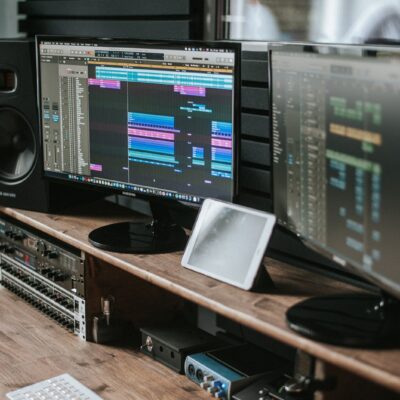
- Digital Audio Workstations: DAWs, software applications that combine recording, editing, mixing, and mastering capabilities, gave musicians and producers unprecedented control over the production process.
- Sampling: Sampling, the process of taking snippets of recorded audio and using them to create new music, became a popular technique in hip-hop, electronic, and other genres.
- MIDI: The Musical Instrument Digital Interface (MIDI) standard allowed electronic instruments to communicate with each other, enabling musicians to create complex and interconnected music systems.
The Impact of Computers on Music Production
Computers have become essential tools for music production, with software programs offering a vast array of features and capabilities.
- Virtual Instruments: Virtual instruments, software simulations of real or imaginary instruments, provide musicians with a wide range of sounds and playing experiences.
- Plugins: Plugins, software modules that can be added to DAWs, offer a variety of effects, processing tools, and virtual instruments.
- Automation: Automation features in DAWs allow musicians and producers to automate tasks such as mixing, leveling, and effects, freeing up time for creativity.
Electronic Music Genres
The convergence of music and electronics has spawned a diverse range of electronic music genres, each with its own unique characteristics and influences.
- Techno: Originating in Detroit in the 1980s, techno is characterized by its repetitive, hypnotic rhythms and often minimalist melodies.
- House: Developed in Chicago in the 1980s, house music is known for its deep basslines, soulful vocals, and uplifting melodies.
- Ambient: Ambient music, pioneered by Brian Eno in the 1970s, is characterized by its atmospheric, textural sounds and emphasis on creating a mood or atmosphere.
- Drum and Bass: Drum and bass, which emerged in the UK in the 1990s, is characterized by its fast-paced rhythms, complex drum patterns, and heavy basslines.
The Future of Music and Electronics
As technology continues to advance, the relationship between music and electronics is likely to become even more intertwined.
- AI and Machine Learning: AI and machine learning are being used to create new music, compose songs, and generate unique sounds.
- Virtual Reality: VR is being explored as a way to create immersive and interactive music experiences.
- Neuroscience: Research into the neuroscience of music is providing insights into how we perceive and respond to sound, potentially leading to new approaches to music creation and listening.
Conclusion
The convergence of music and electronics has had a profound impact on the way we create, listen to, and experience sound. From the early days of electronic instruments to the digital revolution, electronics have played a vital role in shaping the evolution of music. As technology continues to advance, the relationship between music and electronics is likely to remain a fertile ground for innovation and creativity.